

Polymarket, the prediction market platform that has repeatedly faced criticism over insider trading scandals, is once again under scrutiny because of a new manipulation case — this time involving an ordinary hair dryer. The story sounds almost absurd, but it raises a serious question once again: how reliable are these betting markets, really?
On Polymarket, users can bet on almost anything: from sports events and cryptocurrency prices to politics, world affairs, the release of GTA 6, and even the Second Coming of Jesus Christ. Weather forecasts are also part of that universe. And while weather data once seemed relatively safe from manipulation, this latest incident suggests otherwise: sometimes all it takes is an ordinary hair dryer.
Manipulating a temperature bet
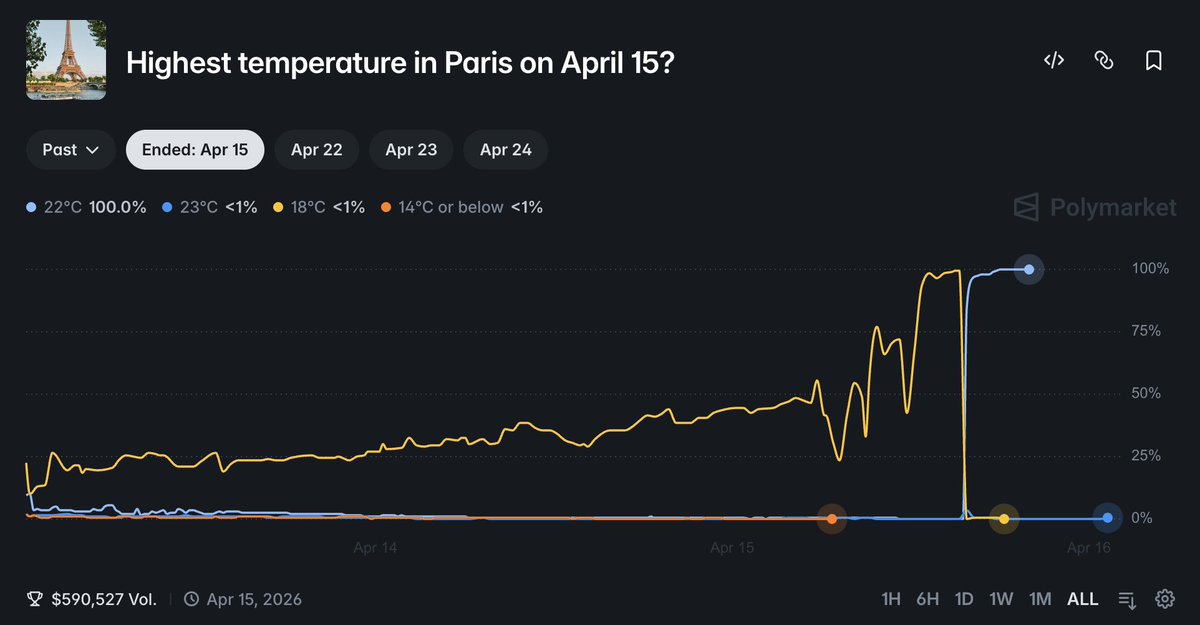
The incident took place in Paris. According to available reports, an unknown individual managed to influence the outcome of a bet on the daily temperature by pointing a hair dryer at a temperature sensor at Charles de Gaulle Airport. Polymarket ultimately relied on data from that sensor. The temporary spike in temperature was recorded as the official daily high, and the market settled in favor of the manipulator.
It is reported that noticeable temperature anomalies were recorded on two days in April, earning the individual around $34,000 in profit.
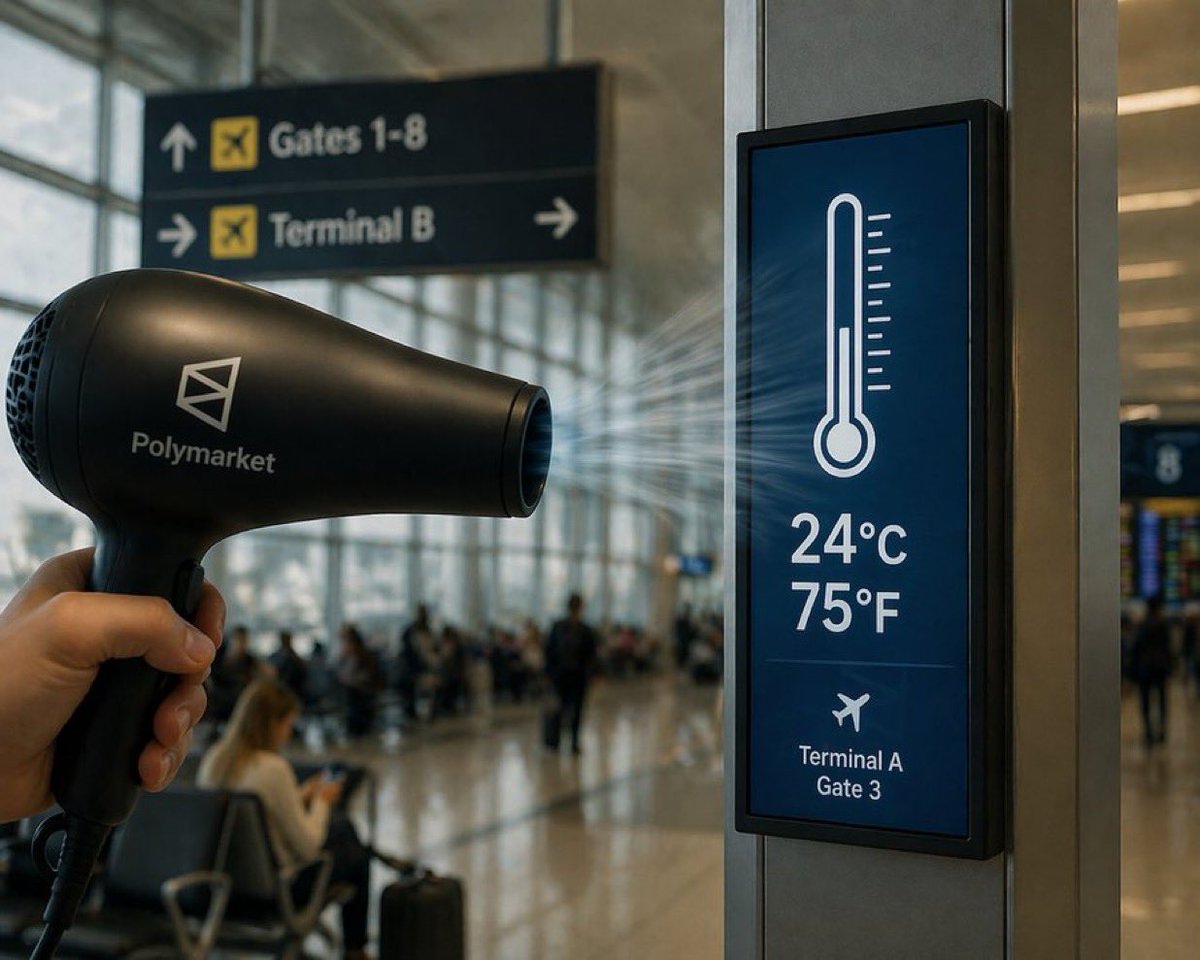
As comical as it may sound, the incident once again highlights the weak points of prediction platforms. These markets can be manipulated in many ways, and, as it turns out, sometimes even a household appliance is enough. If a weather sensor can be fooled with a hair dryer, it is not hard to imagine how vulnerable other types of data may still be.
A systemic problem, not a one-off accident
This episode is just another example of a broader issue. Polymarket and similar platforms such as Kalshi have long faced criticism over insider trades and questionable outcomes.
One of the strangest recent examples came after analyst ZachXBT promised to expose another insider trading scandal. According to reports, those same insiders placed a Polymarket bet that they themselves would be accused as part of the investigation — and managed to profit once again. In effect, it was an insider trade on insider-trading allegations.
Cases like this raise the question of whether such problems are built into the model itself. Prediction markets are not just vulnerable to manipulation — in some sense, their structure actively creates the conditions for it. Much of their popularity comes from operating in a gray or lightly regulated area. But that may also become their long-term weakness.
According to a study by the Technical University of Berlin and IU, only around 30% of active Polymarket traders are actually profitable, and that share continues to decline as the platform grows.
Vitalik Buterin calls for stricter data verification
Ethereum founder Vitalik Buterin also reacted to the Paris hair-dryer incident. Writing on X, he said that after this case and the earlier incident in Myrnohrad, it has become clear that markets like these should rely on at least three independent data sources, and possibly more.
The Myrnohrad incident relates to events in late 2025, when Polymarket hosted bets on the invasion of the Ukrainian city by Russian troops. According to reports, the outcome there was distorted using falsified frontline maps. In other words, that market too depended on unreliable data.
Buterin’s proposal sounds reasonable: several independent sources could indeed reduce the risk of manipulation. However, such a measure does little against insider trading, where the problem lies not only in the data source, but also in the fact that some participants gain an advantage in advance.
Now the police are investigating
Following the Paris incident, French weather agency Météo-France, according to a report by the Financial Times, filed a police complaint over “interference with the operation of an automated data processing system.” An official investigation is now underway.
The hair-dryer story may sound almost ridiculous, but in reality it exposed something serious: even where the outcome of a market appears to rest on objective reality, there may still be a way to influence the result. Which leaves the central question for prediction markets unchanged: can they ever become truly fair and resilient if the system itself constantly creates incentives for manipulation?